
Hedge Cutting Glemsford Suffolk (CO10) Area: In gardens all through Glemsford, hedges are a familiar feature & can fulfil several practical functions, from screening off different areas to softening the edges of a property or bringing some shape to an outdoor space. Without occasional trimming, the majority of hedges will over time grow beyond a sensible size, so a certain amount of ongoing maintenance is important to keep their overall size manageable. How frequently a hedge needs clipping can differ according to the type of hedge, how quickly it grows, as well as the look you would like to end up with.

Not every hedge trimming task involves the same level of work, with some simply requiring a fairly light trim & others calling for a considerable reduction in height or width. How formal you want a hedge to be can also determine how frequently it needs cutting, as neat, straight sides & a well-defined top typically call for a lot more upkeep than a more relaxed & natural appearance. Hedges that have a faster growth rate may require several visits during the main growing season, while slower-growing varieties may only need infrequent trimming.
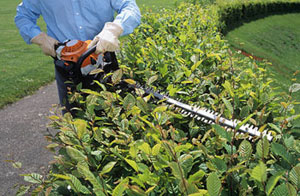
When Do Hedges Need Cutting?
Not every type of hedge in Glemsford should be trimmed at the same time of year, as different types have their own growth patterns & requirements. It is also necessary to take into account the amount of trimming involved, because giving the hedge a minor trim is very different from taking off a considerable amount of older growth. Before commencing any significant work, it is a good idea to consider the particular hedge that is involved & whether or not that time of year is appropriate for cutting it.
When considering hedge trimming, it's also necessary to consider local wildlife, especially during the main bird nesting period. It is necessary to thoroughly check a hedge before trimming it, making certain that any active bird's nests are not interfered with. Where it's difficult to tell if anything is sheltering or nesting in the hedge, putting off the work until a more suitable time would be the safest option.
Timing Your Hedge Cutting
Certain species of hedge can react quite differently to being trimmed back, so the same treatment won't automatically work for them all. The extent to which a hedge can safely be pruned back will depend on the species, as some species can put out fresh growth from older wood after fairly heavy cutting back, whereas others may be slow to recover once the outer layer of green growth has been cut back beyond. How the work should be tackled can thus depend to a large extent according to the type of hedge you are dealing with.
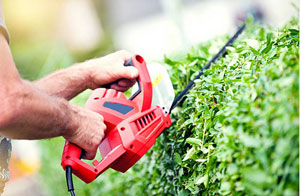
Yet another consideration is the look you want. Formal hedges typically need regular shaping in order to keep clean lines & a balanced shape, whereby informal hedges can perhaps be left to keep more of their natural form. Any excess growth should be brought under control without going too far, because the hedge must still be able to comfortably handle the amount of cutting involved.
When you're dealing with a lengthy section, or one that is growing on uneven ground, getting a straight, evenly shaped finish can be more challenging than it may seem at first. Simply working to the hedge's existing outline can gradually make bumps, dips & uneven sections more noticeable, which is why a bit of thought beforehand can make a real difference to the finished result.
A subtle inward taper is frequently maintained when trimming formal hedges, with the sides gradually narrowing towards the top instead of flaring outwards. More light can filter through to the lower parts of the hedge when the sides are kept slightly narrower towards the top, while the hedge can also take on a more balanced shape. The use of string lines, measuring poles or other simple guides can make it easier to achieve a particularly straight line. Householders in the Glemsford area who want this sort of accurate finish might prefer to have the work complete by an experienced hedge cutting specialist.
Working Space Can Make a Difference
Certain hedge trimming tasks can be fairly straightforward since the whole hedge can be reached easily from level ground, but others can be considerably more tricky. It can be difficult to work on hedges which are located alongside walls, fencing, outbuildings, conservatories or steep banks, and especially wide or tall hedges may need to be trimmed from more than a single position.
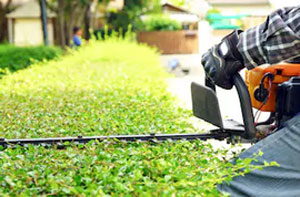
How the hedge can be reached safely should be decided before any trimming starts, rather than leaving access arrangements until the job is in progress. It is also sensible to check the ground around the hedge for obstructions, changes in height or anything else that could make it difficult to position equipment. Keeping the surrounding area clear & safe can involve additional attention where a hedge is next to a pavement, road or neighbouring property, especially where the work could otherwise cause an obstruction.
Where the size, location or amount of growth makes hedge cutting more complicated, a reputable hedge cutting specialist from the Glemsford area should have the tools and practical knowledge to deal with the job in a controlled manner, while also knowing how best to manage the work.
Once hedge cutting moves beyond straightforward routine trimming, the equipment needed can quickly become more extensive than simply relying on an ordinary hedge trimmer. Every part of a hedge cannot necessarily be tackled using the same equipment, because secateurs may be all that is needed for smaller, selective cuts, whereas more substantial branches will require something more substantial, such as a pole saw or chainsaw. Higher hedges or those that are in hard-to-reach positions may call for the use of suitable step-ladders, work platforms or other access equipment, with ground sheets frequently laid out below to contain clippings and make the clean-up easier. Bigger hedge cutting jobs can leave behind a substantial amount of bulky waste, so a shredder or chipper may be used to process the branches, while rakes and leaf blowers can help leave the area tidy once the main waste has been dealt with.
Hedge Cutting Tools & Equipment
The equipment that's needed for hedge cutting will be determined mainly by the overall size and condition of the hedge. The smaller parts of the job can often be carried out using hand shears, particularly where finishing touches are needed, with powered hedge clippers making bigger sections of softer growth easier to trim. Long-reach equipment may be helpful for taller hedges, although it still needs to be operated from a suitable working position.
When tackling thicker stems or mature branches, more suitable cutting tools such as loppers or pruning saws may be more appropriate than a regular hedge trimmer. If the equipment that's being used isn't well suited for thick growth, trying to force it through can produce an untidy finish while also potentially damaging the equipment. Choosing the most suitable tool for each part of the job can make the trimming more efficient, cleaner and easier to control.

Dealing With Large and Difficult Hedges in Glemsford
While a hedge receiving its routine seasonal trim may only need straightforward maintenance, one that's grown far beyond its intended size may need a more considered approach. How much material can reasonably be removed should be considered before the work begins, along with the likely appearance of the hedge following the cutting. With particular hedges, cutting the sides back too severely can reveal older woody growth, which might remain exposed for a lengthy time.
Where a well-established hedge has been left to grow over a number of years, some of the established branches can be extremely heavy. Reducing these parts in a managed way is better than letting heavy pieces drop onto plants, fences or other features below. When a hedge needs to be brought back to its required height and width, the work may be better carried out as a controlled reduction instead of an ordinary cutting job.
What Happens to Hedge Waste?

Once the clippings from a modest hedge have been collected together, the volume of cut material can be quite considerable. Before the surrounding area can be properly cleared after a more extensive job, the mixture of long shoots, thicker branches and fine leafy material left behind will first need to be gathered.
What happens to this green waste will be influenced by the facilities and options that are available & the quantity that's generated. The more modest amounts of suitable hedge waste may be manageable for some Glemsford residents to compost themselves, but larger volumes can need a different way of dealing with them, such as processing and removing the material. Planning how the cuttings will be dealt with before starting the trimming can be particularly worthwhile where there is limited room to move around, as bags, branches and machinery might need to be moved through the area.
Keeping a Hedge Under Control
When a hedge has reached the required dimensions, maintaining a regular maintenance schedule can make future maintenance visits much simpler. As soon as the hedge is being properly maintained, subsequent trims can focus mainly on more recent shoots which have shot out beyond the intended shape, rather than cutting away large amounts of well-established growth each time.
Not every kind of hedge will need this work at the same frequency, so how often it's done can differ. How soon another trim is needed can depend on a variety of factors, including the hedge's growth rate, its variety, the weather & how tidy it needs to be kept. How rapidly a hedge responds after cutting can provide a helpful indication as to how frequently it's likely to need another trim.
Some Glemsford property owners may not want to tackle all the hedge maintenance themselves, in which case a hedge cutting specialist can be used to take care of the work on their behalf.
Professional Hedge Trimming Services in Glemsford
Where a hedge is relatively small and can be readily accessed, residents in Glemsford may choose to carry out the routine cutting themselves. More substantial hedges, those that have restricted access, heavy branches & jobs that require a precise finish can be more demanding, however, especially when specialised tools are needed.
Rather than working out how to approach the work without first seeing exactly what is required, a good hedge trimming contractor from the Glemsford area will check over the hedge and assess its type, dimensions, overall condition, immediate surroundings & the result that you are hoping to achieve. Where several different hedging plants are being maintained, it is important to consider each one on its own merits, as the most suitable clipping technique & trimming schedule will vary from one hedge to another.
How much volume needs to be taken from the top is only part of considering hedge clipping in Glemsford, and it is also wise assessing the hedge in its entirety before working out what work is needed. How the work should be approached will be influenced by a range of considerations, including its species, shape, how easy it is to reach, the area around it and how it's likely to develop in the future. Rather than simply reducing a hedge to the required height and width, it is worth using a practical strategy that keeps its growth within reasonable limits while still preserving the character that makes it a useful part of the garden.
When Professional Hedge Cutting Makes Sense
For property owners in Glemsford who are unable to do this type of work, bringing in a reliable hedge cutting service can mean the job can be left in experienced hands. A hedge cutting service can assess the hedge beforehand, taking its type, condition & location into account before determining exactly how the work should be tackled and how hurdles such as awkward access, thicker growth or dealing with the cuttings will be handled. Where you've got several hedges that need trimming, or you are looking to keep them at a certain height, outline or standard, having somebody who knows what they're doing take care of the work can save you having to keep on top of each hedge yourself.
Nearby:Garden maintenance services are offered in Glemsford and also nearby in: Sudbury, Foxearth, Cavendish, Lavenham, Stanstead, Alpheton, Pentlow Street, Borley Green, Poslingford, Long Melford, Acton, Newman's Green, Boxted, Brook Street, Shimpling, and in these postcodes CO10 7UB, CO10 7RR, CO10 7PT, CO10 7QG, CO10 7QL, CO10 7RA, CO10 7SD, CO10 7SA, CO10 7FH. Locally based Glemsford gardeners will probably have the telephone code 01787 and the postcode CO10.
Cutting Hedges Along Walkways and Roads
When a hedge grows alongside a footpath or road, it needs routine maintenance so that its branches don't encroach on areas intended for pedestrians, cyclists and passing vehicles. When a boundary hedge outside a property in Glemsford gets out of hand, it can leave less room on the pavement, affect visibility near a driveway and make getting past safely a bit awkward. Trimming back the excess growth will help to keep these routes clear, although care may be needed when working alongside traffic or where access is difficult. A specialist covering Glemsford and the surrounding area can look at the hedge's position, arrange suitable access and carry out the necessary cutting, keeping on top of its shape & height.
Keeping Leylandii Hedges Under Control
Thanks to its vigorous growth & thick evergreen foliage, Leylandii is often chosen for hedges around gardens, offering year-round screening, shelter from the wind and a clear boundary between neighbouring properties. A substantial garden screen can be established reasonably rapidly with Leylandii, making it an option for homeowners in Glemsford with sufficient room to allow for its growth. The main disadvantage is that Leylandii may grow several feet in a year under suitable conditions, therefore routine trimming is needed to keep its height & width under control. A Leylandii hedge that is left without routine trimming might become excessively tall, and cutting into its older brown wood can result in bare areas which are unlikely to fill in again. A large Leylandii hedge could block a fair amount of light & occupy valuable garden space, which can cause issues alongside neighbouring properties. When a Leylandii hedge has become too tall & wide, restoring its shape might be more difficult than cutting it regularly from the outset.
Popular Hedge Maintenance Tasks and Services

Glemsford gardeners and hedge specialists will likely help you with cutting out dead & damaged branches from mature hedges, careful trimming & maintenance of established yew hedges, trimming hedge growth away from fences and buildings, lilac hedge pruning, hedge overhang cutback, expert hedge shaping for formal & decorative gardens, cutting back overgrown hedges to improve garden light levels, weekly hedge maintenance, leylandii hedge clipping, hedge thinning & crown reduction in Glemsford, hedge and tree removal, tree surgery in Glemsford, farm hedge cutting, honeysuckle hedge cutting, trimming back branches that obstruct gates and pathways, hedge cutting advice, overgrown hedge trimming, agricultural hedge cutting in Glemsford, boxwood hedge cutting and pruning, evergreen hedge trimming, hedge reductions, commercial hedge cutting and other hedge related services in Glemsford, Suffolk.
Local Hedge Cutting Enquiries

Latest hedge trimming posts: Donnie Skinner from Newman's Green said - Our box hedge is getting too bushy and needs thinning out. Ruth Payne said - Could I get a quote for cutting & shaping two medium-sized hedges & removing the green waste when finished?. Maliha Mccluskey said - I'm looking for a light cut on a newly established beech hedge. Seamus Copeland wrote - Can somebody reduce a tall laurel hedge & thin out some of the heavier growth at the same time?. Josiah Glenn said - I need a couple of smaller hedges tidied & one much larger hedge reduced quite heavily if that is possible. Frankie Mcneil wrote - Could you take a look at an overgrown hedge and let me know how far it can safely be cut back?.
 FAQ: Here are a few of the most frequently asked questions about hedge trimming: Should the sides of a hedge be completely vertical? How often should a privet hedge be cut? How much can you safely cut off a hedge? Are there restrictions on cutting hedges during bird nesting season? What equipment is normally used for hedge cutting? Are there any restrictions on cutting roadside hedges during the nesting season? Why has my hedge gone brown after cutting? When should a laurel hedge be cut? Can diseased or damaged sections of a hedge be cut out?.
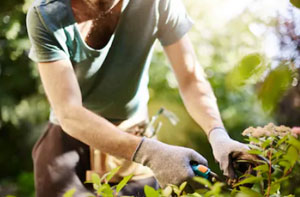 Hedge Care Glemsford
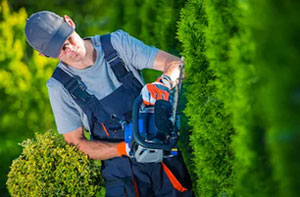 Hedge Cutting Glemsford
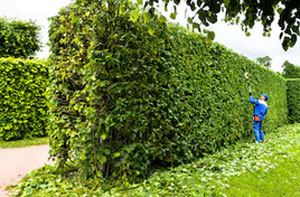 Hedge Trimming Glemsford
Hedge Cutting Near Me
In places near Glemsford you will also find: Foxearth hedge trimming, Shimpling hedge trimming, Acton hedge pruning, Poslingford hedge trimming, Pentlow Street hedge pruning, Pentlow Street hedge clipping, Newman's Green hedge cutting, Poslingford hedge cutting, Borley Green hedge cutting, Lavenham hedge pruning, Cavendish hedge cutting, Brook Street hedge pruning, Borley Green hedge trimming, Shimpling hedge pruning, Brook Street hedge cutting hedge cutting and more.
More: Height Reduction, Hedge Maintenance, Hedge Height Reduction, Seasonal Trimming, Annual Maintenance, Hedge Management, Tree Trimming, Hedge Management, Shrub Trimming, Hedge Cutting, Formal Shaping, Hedge Lowering, Shrub Pruning, Hedge Management, Green Waste Removal, Tree Trimming, Hedge Upkeep, Vegetation Management, Hedge Clipping, Hedge Lowering.
Professional hedge trimming in CO10 area, (dialling code 01787).
Hedge Trimming Glemsford, Hedge Cutting Near Me, Hedge Shaping, Hedge Clipping Glemsford, Topiary, Hedge Trimming Near Me, Hedge Removal Glemsford, Tree Surgery Glemsford, Hedge Cutting Contractors Glemsford, Hedge Maintenance Glemsford, Hedge Cutting Glemsford, Hedge Pruning