
Hedge Cutting Grays Essex (RM17): Whether they're being used to divide different sections of the garden, soften property boundaries or simply bring some shape to an outside space, hedges remain a common feature in gardens all across Grays. Most hedges, though, will need to be cut occasionally to keep their size within reasonable limits. How frequently this needs to be done will depend on the type of hedge, the speed at which it grows & the style of finish that you want to achieve.

Hedge cutting can mean anything from a reasonably gentle tidy-up to a considerable reduction in the height or width of the hedge. A formal hedge with even sides & a crisp, level top will generally require more regular cutting than one with a less formal appearance, where a less structured, more natural shape is the preferred option. Hedges that grow rapidly may need several trims throughout the period of active growth, while less vigorous varieties may only call for occasional attention.
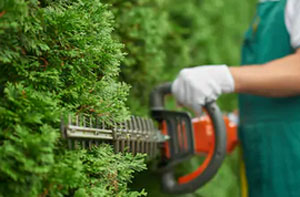
When is Hedge Cutting Best Carried Out?
The right time for clipping hedges in Grays can differ from one variety to another, since each can have its own growing habits and needs. How much trimming is being carried out also needs to be considered, since there is a significant difference between a gentle trim & cutting away a significant amount of older growth. The specific species of hedge that's involved should be identified before pressing on with any significant work, along with whether or not the time of year is right for trimming it.
When carrying out hedge trimming, it's also necessary to be mindful of local wildlife, especially during the nesting season. Checking the hedge properly for nests that are occupied ought to be done before any trimming starts, as they must be left undisturbed. Rather than continuing with the work when there's uncertainty about what may perhaps be living or nesting inside the hedge, the safer approach may be to postpone the job until a more suitable time.
When is Hedge Cutting Best Carried Out?
Hedges don't all react to being cut back in the same way, and some varieties will handle certain types of cutting much better than others. The amount of cutting back a hedge can cope with will vary according to the variety, with some able to generate new growth from mature wood after relatively hard pruning, while others can struggle to recover if the cutting goes beyond the green outer foliage. Before working out how best to carry out the job, it is therefore a good idea to establish what type of hedge you are working on.
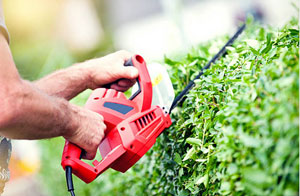
Another point to think about is the finished appearance you want. More formal hedges normally need careful attention in order to keep well-defined lines & a uniform shape, whereas mixed hedges can perhaps be allowed to keep more of their original character. Rather than simply taking off as much excess growth as you possibly can, the objective should be to bring under control that growth without exceeding what the hedge can safely cope with.
A long run or a hedge growing on irregular ground can make it noticeably more awkward to get a neat & even shape. If you're just cutting to the existing profile of the hedge, you will start to exaggerate existing bumps, dips & uneven areas, so a little planning before the actual trimming can make a real differance to the finished appearance.
Many formal hedges are trimmed somewhat narrower towards the top, instead of being allowed to spread outwards. Doing this helps to give the hedge a more balanced profile and can allow more light to reach the lower growth. If the aim is to end up with a particularly even shape, simple guides such as string lines & measuring poles can make the job a lot easier. Anyone in the Grays area who is after a particularly neat or uniform result will find it more convenient to have their hedges shaped by a professional gardener or hedge cutting specialist.
Access Around the Hedge Matters
Where the whole hedge can be reached easily from level ground, the job could be fairly straightforward, although other jobs can be a lot more tricky. Nearby fences, walls, outbuildings, conservatories and steep banks can make a hedge more difficult to work on, while its overall size can also mean that working on it properly from a single position is difficult.
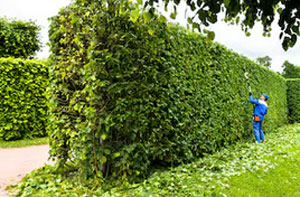
Before commencing the cutting, it's sensible to consider the way that the hedge can be reached safely, instead of trying to arrange access once the cutting has already started. As well as checking access to the hedge itself, it is important to inspect the surrounding ground for obstructions, uneven sections or any other conditions that might make moving equipment difficult. Hedges alongside a pavement, roadway or neighbouring property can require a bit more attention, as the surrounding area needs to be kept clear and safe without causing unnecessary obstruction.
Where height, awkward access or thicker growth makes the job more difficult, an experienced hedge cutting company from the Grays area will usually have the right tools and experience needed to deal with the work safely & efficiently.
What might seem like a relatively simple hedge cutting job can involve several different tools, particularly where there is heavier growth, awkward access or a substantial amount of waste to clear away. A pair of secateurs may come into play for selective smaller cuts, while pole saws or chainsaws could be required where thicker woody growth has to be dealt with. Where the size or position of a hedge makes access more challenging, ladders, platforms or other equipment may well be required to safely reach the working area, and laying ground sheets below can save a fair amount of time when the clippings are collected afterwards. The work doesn't necessarily end once the cutting has been done, because larger jobs can leave a sizeable quantity of material to deal with; chippers or shredders may be used for the larger branches, followed by rakes & leaf blowers to tidy the area.
Tools and Equipment for Hedge Cutting
The size & condition of a hedge will largely determine the kind of equipment required for the cutting. For smaller sections, careful adjustments and precise shaping, a pair of hand-held shears can be well suited, whereas powered hedge cutters are much quicker when cutting more significant areas of lighter growth. Although long-reach equipment can make it easier to reach the higher growth of a particularly tall hedge, it must still be handled from a secure working position.
A conventional hedge trimmer might not be suitable when heavier stems and established branches need to be cut, in which case loppers, pruning saws or similar cutting tools may be more appropriate. If the equipment that is being used is not appropriate for substantial growth, trying to force it through can produce a substandard finish while also potentially damaging the equipment. The most suitable tool for each stage of the job can make a significant difference, helping the cutting to be carried out more quickly, with a cleaner result and better handling.

Tackling Large and Awkward Hedges in Grays
The method might need to be adapted when a hedge has become badly overgrown, rather than simply needing its regular seasonal trim. Instead of just beginning the work, it's a good idea to first establish how much can reasonably be cut back, as well as what type of finished result the hedge is likely to have when the cutting is finished. Removing a significant amount from the sides of particular hedges can reveal older inner growth that might remain bare for a considerable period if you're not careful.
The older branches within a very large hedge can often be alot heavier than you might expect, particularly if the hedge has been maturing for many years. Rather than allowing large branches to drop onto plants, fencing or other features below, it is usually better to reduce these sections in a careful manner. In preference to treating the work as a regular trimming job, a hedge that needs to be brought back to its intended dimensions may benefit from a more considered reduction.
Dealing With the Waste
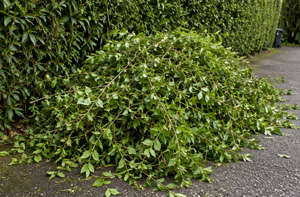
A hedge does not need to be particularly substantial to produce a considerable amount of green waste, and this often becomes more apparent once the clippings have been piled together. The waste left behind after a bigger job can include everything from small leafy cuttings and longer shoots to heavier branches, and all of this will need to be gathered before the area can be fully cleared.
How you deal with this waste will be determined by the facilities and options that are open to you & the volume that is produced. How the clippings are dealt with can depend partly on the volume involved, with some Grays householders able to handle smaller amounts themselves or compost suitable material, while greater amounts may need to be chipped before being removed. Where access is limited, dealing with the cuttings is something that should be thought about before the work starts, particularly if bags, branches or machinery need to be moved through a restricted space.
Keeping on Top of Hedge Growth
Keeping to a regular maintenance routine once a hedge has been brought to the required dimensions can make the work needed on later visits much simpler. When the hedge is being routinely maintained, later trims can concentrate mainly on newer shoots which have grown beyond the intended outline, instead of cutting away large volumes of established growth each time.
There isn't a specific cutting timetable that needs to be followed for every hedge, because the interval between visits can vary according to the hedge being dealt with. When another trimming will be needed can differ according to how quickly the hedge grows, the variety involved, the weather and how tidy the hedge needs to be. Keeping an eye on how rapidly the hedge grows back after cutting can be a helpful way of establishing the most manageable maintenance routine.
For homeowners in Grays, keeping hedges maintained can sometimes mean using a gardener or hedge cutting specialist rather than trying to keep on top of all the work themselves.
Professional Hedge Trimming Services in Grays Area
Routine cutting might be something that some Grays homeowners are confident doing themselves when the hedge is smaller and easy to get to. The work can be considerably more demanding with larger hedges or those that are awkward to get to, while substantial branches, the need for a precise finish and the use of specialised equipment can make the job more difficult still.
Any competent hedge trimming contractor from the Grays area will inspect the hedge before determining how best to approach the task, taking into account its dimensions, species, condition & surroundings, along with the result that you are hoping to end up with. In cases where there are various hedges on the same site they won't always need the exact same type of maintenance, with each one potentially needing a different clipping technique or trimming routine.
Rather than focusing purely on how much needs to be removed from the top section, anybody who's looking at hedge clipping in Grays should look at the hedge in its entirety and consider its overall shape and condition. The best way to handle the work can differ according to the hedge's variety, its shape, how straightforward it's to reach, what lies around it and how it's likely to develop afterwards. Keeping a hedge to reasonable dimensions isn't simply about reducing its size, since a sensible course of action can also help to preserve the essense & character that makes it a useful part of the garden.
Choosing a Hedge Cutting Contractor
Where you're a homeowner in Grays who would prefer to leave the hedge cutting to someone else, or you are unable to undertake this type of work yourself, a competent hedge cutting service can take care of the hedge trimming on your behalf. By looking at the hedge before the work begins, they can get a clearer idea of what is involved and decide how best to tackle the job, including how to manage restricted access, heavier growth and the waste that's produced. That can be worthwhile where there are several hedges that need trimming, or where maintaining a particular height, finish or overall shape is the main aim.
Nearby:Garden maintenance services are available in Grays and also in nearby places like: Tilbury, Horndon on the Hill, Mucking, Linford, Little Thurrock, West Tilbury, Chadwell St Mary, Upminster, Aveley, Badgers Dene, North Stifford, Rainham, Chafford Hundred, Stanford-le-Hope, Orsett, and in these postcodes RM16, RM16 2SL, RM16 2NA, RM16 2QX, RM16 2QA, RM16 2EA, RM16 2LB, RM16 2PL, RM16 2GZ, RM16 2HB. Locally based Grays gardeners will likely have the phone code 01375 and the postcode RM17. Checking this can guarantee that you access locally based gardeners. Grays householders are able to benefit from these and many other related services. Simply click the "quote" form or banner to get info on gardening in your area.
When Pests and Diseases Affect a Hedge
A hedge that's affected by a disease or pest problem may start to look untidy or unhealthy, but the problem can also have an impact on the growth that it is able to produce if it's allowed to continue. Knowing what to look out for can make hedge issues easier to spot, with patches of weak growth, unusual markings, dying stems & changes to the leaves being among the signs that might suggest a pest or disease issue. Some of the problems affecting a hedge come from insects which are attacking its foliage, including aphids, caterpillars and scale insects, while others are linked to fungal diseases that can lead to problems with leaves, shoots & established growth. Affected stems, branches or shoots may eventually need removing, but establishing the cause of the problem to start with can help determine the most suitable way of dealing with it. Cutting out affected growth may form part of dealing with the problem, but any pest, disease or problem with the growing conditions might still need to be dealt with.
Keeping Privet Hedges Under Control
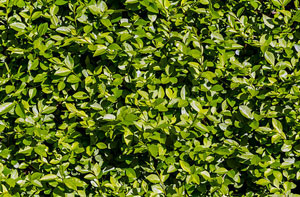
For anyone who's looking for a hedging plant that can grow into a compact garden boundary while still retaining a neat shape, privet has always been a common choice for garden hedging. Keeping an established hedge looking neat can involve more regular cutting than some other forms of hedging, since the new shoots come through pretty speedily & may soon start spreading beyond the required shape. Frequent trimming can help to maintain the desired width and height while promoting dense growth across the face of the hedge. The longer that a privet hedge is left to grow without being trimmed, the more woody some of its branches can become, which will at some point call for a more substantial reduction to bring the hedge back to the desired dimensions.
Searching For Gardeners On the Web
These days, it's incredibly straightforward to locate a local gardener online, though, with so many possibilities, figuring out where to look can really help. Begin with platforms that are dedicated to tradespeople, allowing you to sift through reviews, compare different services, and figure out who's the best option. When you browse local community groups on social media, you'll notice that many people are eager to share their recommendations based on personal experiences.

Once you've made a list of potential candidates, it's wise to do some further checking to find out if they fit the criteria. Expect a good gardener to have clear pricing, the necessary services, and to be someone you can readily reach. If they have a website going, checking for their work photographs, customer testimonials, or an overview of their offerings can really assist in deciding if they're worth your time.
It's a smart idea to have a quick chat about your garden needs before booking, plus you'll be able to get a quote too. When you need some gardening advice, a professional gardener is just a question away; they'll offer helpful suggestions and let you know when they can assist you. Taking the time to find the perfect gardener will pay off in the long run, ensuring your garden stays in great shape, whether you need a one-off tidy or regular upkeep.
Regular Hedge Maintenance Tasks and Services

Grays gardeners and hedge specialists can normally help with privet hedge clipping, quickset hedging, the maintenance of trees and hedges, overgrown hedge trimming, hedge height reduction in Grays, help with removing a hedge, general upkeep services, boundary hedge cutting, hedge nutrient management & fertilisation in Grays, hawthorn hedge cutting, beech hedge trimming, hedge pest control, quotations for hedge cutting, tree surgery, ivy removal, hedge and tree removal services, griselinia hedge cutting, box hedge pruning, hedge reductions in Grays, hedge tidying, hedge planning in Grays, hedge relocation & transplanting in Grays, hedge cutting advice, hedge thinning, roadside hedge cutting and other hedge related services in Grays, Essex. These are just a selection of the duties that are conducted local gardeners. Grays specialists will tell you about their full range of services.
Hedge Cutting Services Grays
- Hedge Makeovers in Grays
- Hedge Height Reduction in Grays
- Hedge Pruning in Grays
- Hedge Clipping in Grays
- Shrub Pruning in Grays
- Hedge Care in Grays
- Hedge Shaping in Grays
- Hedge Reduction in Grays
- Hedge Trimming in Grays
- Hedge Removal in Grays
- Tree Pruning in Grays
- Hedge Cutting in Grays
- Hedge Maintenance in Grays
- Hedge Planting in Grays
 Hedge Care Grays
 Hedge Cutting Grays
Hedge Trimming Grays
Hedge Cutting Grays
Hedge Trimming GraysProfessional Hedge Cutting Near Me
In places near to Grays you will also find: Tilbury hedge cutting services, West Tilbury hedge cutting services, Chadwell St Mary hedge cutting services, Chafford Hundred hedge cutting services, Horndon on the Hill hedge cutting services, Mucking hedge cutting services, Orsett hedge cutting services, North Stifford hedge cutting services, Upminster hedge cutting services, Badgers Dene hedge cutting services, Aveley hedge cutting services, Linford hedge cutting services, Stanford-le-Hope hedge cutting services, Little Thurrock hedge cutting services, Rainham hedge cutting and more. All these towns and villages are catered for by local hedge specialists. Grays householders can get hedge cutting price quotes by going here.
Specialist hedge trimming in RM17 area, phone code 01375.
Hedge Shaping - Topiary - Hedge Removal Grays - Hedge Clipping Grays - Hedge Pruning - Hedge Cutting Grays - Hedge Cutting Contractors Grays - Hedge Trimming Near Me - Hedge Trimming Grays