
Hedge Cutting Ilford Essex (IG1): In gardens all across Ilford, hedges are a regular sight & can fulfil several different purposes, from dividing different areas to softening property boundaries or providing some definition to an outside space. Without regular clipping, most hedges will over time grow beyond manageable dimensions, so some attention from time to time is important to keep their height & width under control. How regularly a hedge needs cutting can change according to the type of hedge, how fast it grows, as well as the finished appearance that you want to end up with.

In some situations, a hedge might only require a relatively gentle cut, whilst in others it could require a considerable reduction in height or width. A more formal hedge with straight sides and a crisp top will usually require more regular trimming than a more informal hedge, where a more relaxed & natural shape is preferred. Rapid-growing types of hedge can also call for several visits during the period of active growth, whereas more slowly growing hedges may only call for periodic clipping.
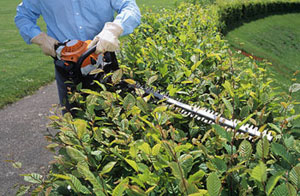
What Time of Year Should Hedges Be Cut?
The best time for clipping a hedge in Ilford can vary from one variety to another, because each can have different growth characteristics and needs. How much cutting is being carried out also needs to be taken into account, because there is a substantial difference between a gentle trim and cutting back a significant amount of mature growth. If any extensive hedge work is planned, it's sensible checking whether the time of year is right for the specific type of hedge before beginning the job.
Particular consideration should also be given to local wildlife during the main bird nesting period. It is essential to thoroughly check a hedge before cutting it, making certain that any active bird's nests are left undisturbed. Any concern about animals that might perhaps be hiding or nesting in the hedge is reason enough to put off the trimming, with the job put back for a more appropriate time.
The Right Time to Cut Your Hedges
How well a hedge responds to cutting will depend according to the variety, as different hedges can tolerate varying amounts of cutting. A relatively hard reduction may be quite readily tolerated by certain hedge varieties, which can develop new growth from older wood, but other varieties may struggle to recover when cut beyond their outer green growth. How the work should be handled can therefore vary significantly according to the variety of hedge involved.
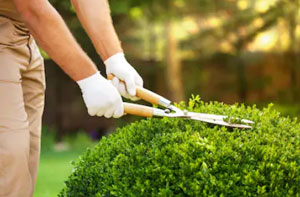
Yet another consideration is the finish you are hoping for. While more formal hedges typically require careful trimming to maintain their neat lines and uniform shape, less formal hedges can sometimes be allowed to maintain a more natural shape and character. Any excess growth should be kept in check without taking too much off, since the hedge still needs to be able to readily recover from the amount of reduction involved.
Getting a hedge even and properly shaped is often more challenging than it first appears, particularly when you are trimming a lengthy section or one situated on sloping ground. Without a little preparation beforehand, just following the existing profile can cause any dips, bumps and irregular sections to become more noticeable, potentially affecting the end result.
Instead of letting the sides to spread outwards, a formal hedge is frequently shaped with a subtle taper, making it a bit narrower at the top. As well as helping to give the hedge a more balanced look, this gently tapered shape can help more light to filter through to the foliage lower down. For hedges where a uniform result is particularly necessary, string lines, measuring poles & other simple guides can be used to guide the cutting. For householders in Ilford, bringing in an experienced hedge cutting specialist can be the best option where neat & consistent finish is crucial.
Getting Proper Access to the Hedge
Having good access to the entire hedge from even ground can make the cutting relatively straightforward, while awkward access can make other jobs a lot more awkward. It can be awkward to access hedges located alongside walls, fences, sheds, conservatories or steep banks, and particularly tall or wide hedges might need to be trimmed from more than a single position.
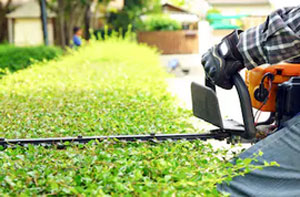
The way in which the hedge can be accessed safely should be established before any work begins, instead of leaving these arrangements until the job has already started. As well as looking at access to the hedge itself, it is a good idea to inspect the area around it for obstacles, uneven sections or any other scenarios that might restrict the movement of equipment. Extra care may be required when working on a hedge which borders a pavement, road or neighbouring property, particularly to make sure the area around the hedge remains safe and reduce unnecessary inconvenience.
When a hedge is particularly tall, difficult to access or has heavy growth to deal with, getting in a reliable hedge cutting specialist from the Ilford area can mean the work is handled with the right equipment for the job.
What might seem like a relatively simple hedge cutting job can call for several different tools, especially where there is thicker growth, awkward access or a sizeable amount of waste to deal with. The tools which are used can vary as the cutting gets more demanding, with secateurs suited to smaller, more selective cuts and chainsaws or pole saws coming into their own when heavier woody growth needs removing. According to the size & location of the hedge, suitable ladders, platforms or other access equipment can also be required, while ground sheets can make it easier to collect the mass of smaller clippings that comes down during the cutting. The work does not necessarily end once the hedge has been cut, as bigger jobs can leave a considerable amount of material to remove; shredders or chippers may be used for the larger branches, followed by leaf blowers & rakes to leave the surrounding area tidy.
Hedge Cutting Equipment and Tools
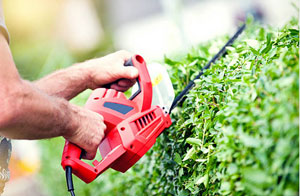
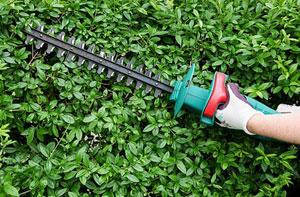
Different hedges can need different types of equipment, depending on their condition & size. The smaller parts of the work can often be carried out using manual hedge shears, particularly where fine adjustments are needed, with powered hedge trimmers making bigger sections of less woody growth quicker to work through. Although long-reach equipment can make it simpler to get to the higher sections of a tall hedge, it should still be operated from a stable working position.
The more substantial the stems and mature branches, the more likely it is that loppers, pruning saws or similar cutting tools will be required, rather than a regular hedge trimmer. A rough finish can be the result when inappropriate equipment is forced through thick growth, and there is also a chance of causing damage to the equipment. Different parts of the work may need different tools, and making the right choice can help give you better control while making the job quicker & the finished result neater.

Dealing With Large and Awkward Hedges in Ilford
The method might need to be different when a hedge has become seriously overgrown, rather than simply needing its routine seasonal cut. Before trimming begins, it is worthwhile to determine how much growth can sensibly be removed and what the hedge is expected to look like afterwards. Rather than removing too much from the sides of particular hedges in one go, the amount removed needs to be kept within sensible limits, otherwise old internal growth may be exposed & remain bare for a long time.
Where a well-established hedge has been left to grow over a long period, some of the established branches can be extremely heavy. Large sections are better cut back in a careful way, rather than simply being allowed to drop onto plants, fences or other features below. A carefully managed reduction may be more appropriate when a hedge has to be cut back to its intended size, rather than giving it an ordinary trim.
What Happens to the Cuttings?
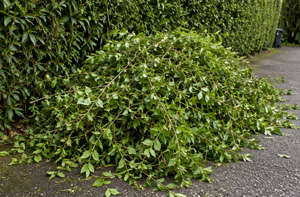
Once the trimmings from a fairly modest hedge have been brought together, the quantity of cut material can be surprisingly large. The debris left behind after a larger hedge reduction can include anything from long shoots & leafy material through to thicker branches, and all of this will have to be cleared away before the area can be properly cleaned up.
How the material is dealt with will largely depend on both the quantity involved & the facilities & options that are on hand. For some homeowners in Ilford, composting suitable clippings may be a straightforward option, whereas larger volumes may have to be taken away & dealt with in a different way. Where access is awkward, managing the resulting waste is something that should be considered before the trimming gets underway, particularly if bags, branches or machinery need to be moved through a restricted space.
Keeping Hedge Growth Under Control
Keeping to a regular trimming routine once a hedge has reached the intended dimensions can make the cutting needed on future visits a lot easier. With regular cutting, it may only be necessary on following cuts to trim back the fresh shoots which have pushed out beyond the intended outline, rather than having to cope with large quantities of well-established growth.
There isn't a specific trimming schedule that needs to be applied for every hedge, as the frequency can vary according to the hedge being dealt with. When another trim will be required can vary according to how rapidly the hedge puts on new growth, the species involved, weather conditions and how neat the finished appearance needs to be. How rapidly a hedge responds after trimming can provide a practical idea as to how often it is likely to need trimming again.
For householders in Ilford, keeping hedges maintained can sometimes mean using a gardener rather than attempting to keep on top of all the work themselves.
Professional Hedge Cutting Services in and Around Ilford
A fairly small hedge with uncomplicated access may be straightforward enough for some residents in Ilford to cut themselves, especially when only regular cutting is needed. Hedge cutting can become considerably more demanding when access is difficult or restricted, particularly where specialised equipment is required.
Instead of working out how to approach the task without first finding out exactly what is involved, a good hedge care specialist from the Ilford area will take a look at the hedge and assess its species, dimensions, overall condition, immediate surroundings and the finish that you're hoping to get. Where various different hedges are being dealt with, it's a good idea to look at each one separately, as the most appropriate cutting method and trimming routine may differ from one hedge to another.
When you're looking at hedge trimming in Ilford, it's important to consider the hedge as a whole rather than focusing solely on how much needs to be cut from the top. The hedge's species, current shape, ease of access, surrounding features and likely future growth will all play a part in determining how the cutting should be carried out. A hedge doesn't have to lose its natural character in order to be kept at reasonable dimensions, as the most suitable cutting techniques, combined with a practical plan of action, can help to retain both.
Professional Hedge Cutting
Homeowners in Ilford who would prefer to have someone else carry out the hedge cutting, or who can't do this sort of work themselves, can bring in a reliable hedge cutting contractor to take much of the uncertainty out of the job. They can check the type and condition of the hedge, determine the most suitable way to cut it and take care of problems such as awkward access, thicker growth and dealing with the cuttings. For householders with more than one hedge that needs maintaining, getting somebody in to handle the work can be a practical way of keeping on top of them, whilst also making it easier to maintain the required height, shape or finish.
Nearby:Garden maintenance services are offered in Ilford and also in nearby places like: Barking, Gants Hill, Woodford Green, Chigwell, Rigg Park, Little Heath, Bromley by Bow, Barkingside, Romford, Stratford, Becontree, Seven Kings, Redbridge, Loxford, Goodmayes, Dagenham, and in these postcodes IG1 1ED, IG1 1HB, IG1 1LX, IG1 1SF, IG1 1NL, IG1 1HD, IG1 1PJ, IG1 1LD, IG1 1QQ, IG1 1JH. Locally based Ilford gardeners will probably have the postcode IG1 and the telephone dialling code 020. Checking this will confirm that you access local gardeners. Ilford householders will be able to utilise these and lots of other similar services. Click on the "quote" banner to get specifics of gardening in your area.
Cutting and Maintaining Privet Hedges
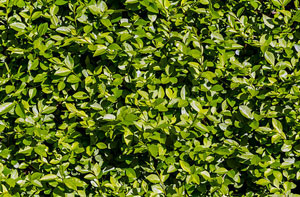
Ilford householders who are thinking about planting a privet hedge can find useful information below about some of the things worth considering before planting - For anybody who's looking for a hedge that can grow into a dense garden boundary while still retaining a neat shape, privet has always been a common option for domestic hedging. It's generally quite tolerant of regular cutting & can put on a fair amount of new growth during the warmer months, meaning that mature privet hedges may need cutting more than once every year if a neat appearance is to be maintained. Allowing new shoots to grow unchecked can gradually add to the height and width of a privet hedge, whereas regular trimming helps keep its shape under control and encourages dense growth across its surface. Standard trimming may be all that's needed for a privet hedge that has been kept under control, but a neglected one can be considerably more involved, with mature woody growth sometimes requiring a much greater reduction.
Hedge Maintenance Tasks & Services

Ilford gardeners and hedge specialists will likely help you with hedge re-planting, the correct trimming of maze hedges, hedge clipping removal, juniper hedge cutting, roadside hedge cutting, ficus hedge cutting, instant hedging, griselinia hedge planting, domestic hedge trimming, flail hedge cutting, hawthorn hedge cutting, hedge stump grinding, cedar hedge clipping, hedge overhang cutback, honeysuckle hedge trimming, beech hedge cutting, agricultural hedge cutting, hedge pest control, overgrown hedge trimming in Ilford, home hedge cutting, hedge cutting, monthly hedge maintenance, hedge height reducing, conifer hedge cutting in Ilford, decorative hedge cutting in Ilford and other hedge related services in Ilford, Essex. These are just a few of the tasks that are conducted local gardeners. Ilford specialists will be happy to tell you about their entire range of gardening services.
Hedge Cutting Services Ilford
- Hedge Care in Ilford
- Hedge Shaping in Ilford
- Hedge Planting in Ilford
- Hedge Trimming in Ilford
- Shrub Pruning in Ilford
- Hedge Removal in Ilford
- Hedge Cutting in Ilford
- Hedge Lopping in Ilford
- Hedge Maintenance in Ilford
- Hedge Pruning in Ilford
- Hedge Pest Control in Ilford
- Hedge Height Reduction Ilford
- Hedge Spraying in Ilford
- Tree Pruning in Ilford
 Hedge Care Ilford
 Hedge Cutting Ilford
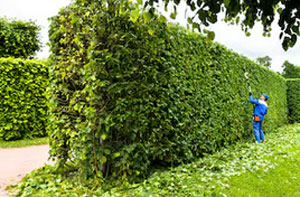 Hedge Trimming Ilford
Hedge Care Near Me
In places near to Ilford you will also find: Seven Kings hedge cutting services, Romford hedge cutting services, Woodford Green hedge cutting services, Barkingside hedge cutting services, Rigg Park hedge cutting services, Barking hedge cutting services, Becontree hedge cutting services, Chigwell hedge cutting services, Redbridge hedge cutting services, Stratford hedge cutting services, Gants Hill hedge cutting services, Dagenham hedge cutting services, Loxford hedge cutting services, Little Heath hedge cutting services, Goodmayes hedge cutting services, Bromley by Bow hedge cutting and more. Most of these villages and towns are serviced by local hedge specialists. Ilford residents can get estimates by clicking here.
Professional hedge cutting in the IG1 area, 020.
Hedge Clipping Ilford - Tree Surgery Ilford - Hedge Removal Ilford - Hedge Cutting Ilford - Hedge Trimming Near Me - Conifer Trimming - Hedge Cutting Services - Hedge Shaping - Hedge Cutting Contractors Ilford