
Hedge Cutting Wakefield West Yorkshire (WF1): You will often see hedges in gardens all across Wakefield, where they can help to divide different areas, soften the edges of a property & bring definition to an outdoor space. Nevertheless, the majority of hedges need to be clipped every once in a while if they are to remain at a manageable size & shape. The type of hedge, how fast it grows and the sort of finish that you want to achieve will all determine how regularly it needs cutting.

The amount of cutting a hedge needs can vary quite a bit, ranging from a relatively gentle trim to a considerable reduction in width or height. The precise appearance of a formal hedge normally takes more regular attention to preserve, whereas an informal hedge can be allowed to develop a less structured shape. Fast-growing types of hedge can also call for several trims during the period of active growth, whereas slower-growing hedges may only call for occasional cutting.
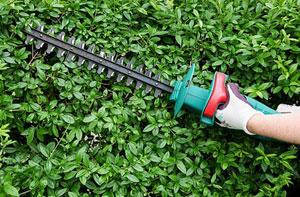
When Should Hedges Be Cut?
Not every hedge in Wakefield should be cut at the same stage of the year, because different species have their own growing patterns and requirements. How much trimming is being done also has to be taken into account, because there is a big differance between a minor cut and cutting back a substantial amount of older growth. Rather than starting significant work straight away, it is sensible first checking what species of hedge you're working with & whether or not that point of year is suitable for cutting it.
The potential presence of birds & other wildlife also needs to be borne in mind, particularly during the main nesting period. Any hedge that is about to be trimmed should first be carefully checked for bird's nests that are active, with work held off wherever there is a risk of disturbing them. Where it is difficult to tell whether anything is sheltering or nesting in the hedge, postponing the cutting until a more appropriate time would be the most sensible option.
Choosing the Right Time to Cut Your Hedge
The way a hedge reacts to cutting can differ from one species to another. How far a hedge can safely be cut back will vary, as certain species can put out fresh growth from mature wood after fairly hard pruning, whereas others may have difficulty recovering once the outer layer of green growth has been cut away. The variety of hedge you are working with can thus have a significant impact on the manner in which the job should be carried out.

How you want the hedge to appear is another important factor. If a hedge is being kept in a carefully groomed style, regular attention will normally be needed to maintain its clean lines & even profile, while less formal hedges can sometimes be allowed to keep more of their natural appearance. Any unwanted growth should be controlled without removing too much, because the hedge must still be able to safely recover from the amount of reduction involved.
Keeping a hedge even and properly shaped is often harder than it may seem at first, particularly when you're dealing with a long run or one growing on irregular ground. A bit of thought before getting started with the cutting can help minimise the risk of accentuating existing bumps, dips & uneven areas that might otherwise become more apparent if you simply follow the hedge's existing shape.
When cutting a formal hedge, the sides are generally brought in near the top to maintain a gentle taper, rather than letting the hedge become wider towards the top. By tapering the sides slightly, you can help more light reach the lower parts of the hedge, in addition to creating a more well-proportioned look. For hedges where a straight line is particularly necessary, measuring poles, string lines & other basic guides can be used to provide a reference to work from. When this degree of accuracy is required, those living in Wakefield will often elect to bring in a local hedge cutting specialist rather than attempting to accomplish the finish on their own.
The Effect of Access on Hedge Cutting
Hedge cutting can be quite straightforward when the entire hedge is within easy reach from level ground, whereas other jobs can prove considerably more tricky. Nearby fences, walls, outbuildings, conservatories & steep banks can make a hedge harder to access, while its overall size can also mean that trimming it properly from a single position is not always possible.
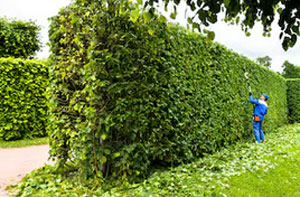
Rather than leaving it until the job is in progress to figure out how the hedge can be reached safely, this is something that should be considered beforehand. Obstacles, changes in ground level and other potential difficulties alongside the hedge should also be taken into account beforehand, especially in cases where they could make carrying equipment more tricky. Keeping the surroundings clear and safe can require extra attention where a hedge borders a road, pavement or neighbouring property, especially where the work could otherwise cause an obstruction.
Some hedge cutting jobs become much more demanding because of the height of the hedge, and in these situations a reputable hedge cutting specialist from the Wakefield area can deal with the more awkward aspects of the cutting.
The range of equipment used on a larger hedge cutting job can extend well beyond the hedge trimmer itself, with other tools often required. Where only individual shoots or smaller stems need attention, secateurs can offer more control, while a chainsaw or pole saw may be more appropriate once the growth becomes heavier and more established. The equipment that's required isn't limited to cutting tools, especially on higher or harder-to-reach hedges; suitable platforms or step-ladders can provide the necessary access, whilst plastic sheeting laid on the ground will help prevent smaller clippings from spreading across the surrounding area. Bigger hedge cutting jobs can generate a substantial amount of bulky waste, so a shredder or chipper may be used to deal with the branches, while rakes & leaf blowers can help collect the remaining debris once the cutting is finished.
Hedge Cutting Equipment and Tools
Which tools are most suitable for hedge trimming will vary according to the size and condition of the hedge being worked on. The more precise parts of the job can often be handled using hand-held shears, particularly where careful shaping are required, with powered hedge cutters making more extensive areas of lighter growth quicker to trim. Although long-reach equipment can help with reaching the upper parts of a higher hedge, it still needs to be operated from a safe working position.
Thicker stems & older branches may need loppers, pruning saws or other suitable cutting tools rather than an ordinary hedge trimmer. If the equipment being used isn't suitable for thick growth, trying to force it through can leave a substandard finish while also increasing the risk of equipment damage. The appropriate tool for each section of the task can make a noticeable difference, helping the trimming to be carried out more efficiently, with a cleaner result and better handling.

Coping With Large and Awkward Hedges in Wakefield
The approach might need to be changed when a hedge has become considerably overgrown, rather than just needing its regular seasonal cut. Prior to trimming begins, it is sensible to work out how much material can sensibly be taken off and what the hedge is expected to look like once the cutting is complete. Care needs to be taken when reducing the sides of some hedges, since removing too much can expose older internal growth that may not produce fresh growth for some time.
The established branches within an extremely large hedge can sometimes be far heavier than they first appear, especially if the hedge has been growing for a long time. Where substantial pieces need to be cut back, doing so in a managed manner can help reduce the risk of them falling onto plants, fencing or other features lower down. Sometimes, bringing a hedge back to its desired dimensions should be approached as a controlled reduction rather than a routine maintenance job.
Once the Hedge Has Been Cut

It is not always obvious how much green waste even a fairly modest hedge can produce until the trimmings are piled together. After a more substantial hedge cutting job, there may be a mixture of leafy material, longer shoots & heavier branches to collect before the surrounding area can be thoroughly cleared.
How the waste is dealt with will be influenced by both the amount produced and the disposal options that are accessible. Some homeowners in Wakefield may be able to compost suitable clippings or deal with smaller amounts themselves, while greater amounts may need to be processed and removed. Planning how the cuttings will be dealt with before pressing on with the trimming can be particularly helpful where space is limited, as bags, branches and machinery may need to be carried through the area.
Keeping Future Cutting Manageable
Rather than allowing your hedge to grow well beyond its intended dimensions again, ongoing maintenance can help maintain it at a suitable size and make the following trim considerably simpler. Large quantities of mature growth shouldn't need to be taken off constantly if the hedge is kept properly maintained, as later trims can instead deal mainly with the newer shoots poking out beyond the preferred outline.
How often a hedge needs this maintenance can vary from one kind of hedge to another, rather than being identical in every case. There's no set interval before another trimming is needed, as this can be determined by the hedge's variety, how fast it puts on new growth, the prevailing conditions and the appearance that needs to be maintained. Rather than sticking to a set maintenance schedule, it can be useful to keep an eye on how quickly the hedge puts on new growth after cutting, and use this to establish when further trimming is needed.
For householders in Wakefield, keeping hedges maintained can sometimes mean using a gardener or hedge cutting specialist rather than attempting to keep on top of all the work themselves.
Professional Hedge Cutting Services in and Around Wakefield
Some householders in Wakefield may be confident cutting more modestly sized hedges themselves, especially where the growth being cut can be comfortably reached. When specialised equipment is required, particularly with more substantial hedges, awkward access, heavy branches or work requiring an accurate finish, the cutting can become more difficult to carry out.
Rather than working out how to go about the work without first seeing what's involved, a decent hedge trimming specialist from Wakefield will check over the hedge & assess its species, dimensions, condition, location and the result that you are hoping to end up with. Each hedge may require a slightly different approach or trimming routine, which can be particularly relevant when various different hedging plants are being maintained.
When you're planning to do hedge trimming in Wakefield, it is a good idea to consider the hedge as a whole rather than focusing solely on how much needs to come off the top. The hedge's type, shape, accessibility, surroundings and future growth will all play a part in determining how the cutting should be tackled. A hedge doesn't have to lose its individual character in order to be kept to manageable dimensions, since the right cutting methods, combined with a practical game plan, can help to retain both.
Finding Someone to Cut Your Hedge
Rather than attempting to tackle the hedge trimming themselves, property owners in Wakefield who would prefer to leave this kind of work to somebody else, or who cannot do it themselves, can use a competent hedge cutting company who can save them having to carry out the work themselves. By assessing the hedge before the trimming gets underway, they can get a more complete idea of what is actually involved and work out how best to carry out the job, including how to handle awkward access, heavier growth & the waste that's produced. This can be particularly worth considering for property owners who have several hedges to have cut, because each one may need to be dealt with in a different way, or there may be a specific finish to achieve.
Nearby:Garden maintenance services are available in Wakefield and also nearby in: Alverthorpe, Warmfield, Newton Hill, Horbury Bridge, Outwood, Sandal, Lupset, East Moor, Thornes, Walton, Agbrigg, Durkar, Kirkhamgate, Flushdyke, Carr Gate, Wrenthorpe, Kirkthorpe, Flanshaw, and in these postcodes WF1 1DG, WF1 1PA, WF1 1UW, WF1 1HA, WF1 1SA, WF1 1AD, WF1 2AZ, WF1 2BG, WF1 1TB, WF1 1QA. Locally based Wakefield gardeners will probably have the postcode WF1 and the dialling code 01924. Checking this out should confirm you are accessing locally based gardeners. Wakefield householders are able to benefit from these and various other garden related services. Click on the "quote" banner to get information on gardening in your area.
Privet Hedge Cutting & Maintenance
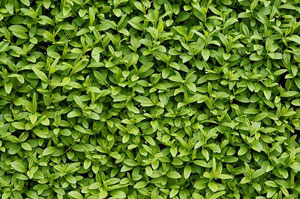
Wakefield property owners who are considering planting a privet hedge can find useful information here about what to expect - One of the reasons that privet is so widely used for hedges in Wakefield is its ability to develop into a compact screen that is easy to keep looking tidy with regular maintenance. The amount of new growth that is produced by a privet hedge can make a considerable difference to how often it needs trimming, with established hedges sometimes needing several visits during the growing season to remain looking neat and well maintained. Keeping privet clipped on an ongoing basis can prevent it from spreading beyond the intended size, while at the same time helping the hedge develop dense, even growth. Once a privet hedge has been left without regular attention for a considerable length of time, thicker, more established growth can develop, increasing the probability that a thorough reduction will be needed rather than a standard trim.
Common Hedge Maintenance Tasks & Services

Wakefield gardeners and hedge specialists can normally help you with hedge weed control & mulching, hedge stump grinding, commercial hedge cutting, hawthorn hedge cutting, hedge transplanting & relocation, agricultural hedge cutting in Wakefield, wisteria pruning, flail hedge cutting, hedge and shrub removal services, maze hedge cutting, beech hedge cutting, tree shaping, leylandii hedge planting, hedge pest control, roadside hedge trimming, home hedge cutting, tall hedge cutting, shrub and hedge cutting, hedge re-planting, overgrown hedge cutting, evergreen hedge cutting and pruning, leylandii hedge clipping, wood chipping, the maintenance of hedges and trees, monthly hedge maintenance and other hedge related services in Wakefield, West Yorkshire. These are just an example of the activities that are conducted local gardeners. Wakefield specialists will be happy to inform you of their whole range of services.
 FAQ: Here are a few of the most frequently asked questions about hedge trimming: How are hedges cut when access is difficult? Why has my hedge gone brown after cutting? Can hedges be cut at any time of year? Can diseased or damaged sections of a hedge be cut out? Do flowering hedges need to be cut at a particular time? How often should a conifer hedge be trimmed? How do you get the sides of a hedge even? Can hedge cuttings be composted?
Hedge Cutting Services Wakefield
- Hedge Pruning in Wakefield
- Hedge Lopping in Wakefield
- Hedge Cutting in Wakefield
- Hedge Height Reduction Wakefield
- Hedge Clipping in Wakefield
- Hedge Care in Wakefield
- Hedge Reduction in Wakefield
- Hedge Maintenance in Wakefield
- Tree Pruning in Wakefield
- Hedge Trimming in Wakefield
- Hedge Removal in Wakefield
- Hedge Makeovers in Wakefield
- Hedge Shaping in Wakefield
- Shrub Pruning in Wakefield
More Local Tradespeople: Though you might be seeking somebody who specializes in hedge care in Wakefield, West Yorkshire, you could likewise find patio layers in Wakefield, greenhouse installation in Wakefield, a tree surgeon in Wakefield, garden design & planning in Wakefield, garden paths in Wakefield, shed assembly in Wakefield, landscape gardening in Wakefield, gutter cleaning in Wakefield, driveway cleaning in Wakefield, garden maintenance in Wakefield, fencing in Wakefield, brick barbecues in Wakefield, roof cleaning in Wakefield, garden lighting in Wakefield, a garden pond installer in Wakefield, decking installation in Wakefield, lawn mowing in Wakefield, SKIP HIRE in Wakefield, garden clearances in Wakefield, jet washing in Wakefield, and all kinds of other people who'll be able to help make your garden better.
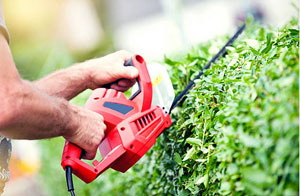 Hedge Care Wakefield
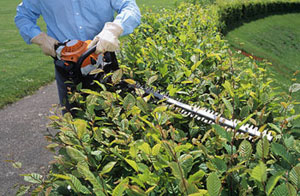 Hedge Cutting Wakefield
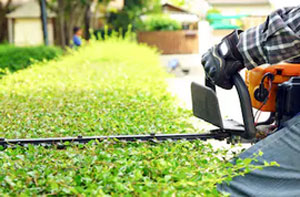 Hedge Trimming Wakefield
Specialist Hedge Trimming Near Me
In places near to Wakefield you can also find: Flushdyke hedge cutting services, Kirkthorpe hedge cutting services, Durkar hedge cutting services, Alverthorpe hedge cutting services, East Moor hedge cutting services, Outwood hedge cutting services, Wrenthorpe hedge cutting services, Flanshaw hedge cutting services, Sandal hedge cutting services, Warmfield hedge cutting services, Carr Gate hedge cutting services, Thornes hedge cutting services, Walton hedge cutting services, Horbury Bridge hedge cutting services, Newton Hill hedge cutting services, Kirkhamgate hedge cutting services, Lupset hedge cutting services, Agbrigg hedge cutting and more. The majority of these places are catered for by local hedge specialists. Wakefield householders can get hedge cutting quotes by clicking here.
More: Shrub Pruning, Hedge Planting, Hedge Cutting, Laurel Trimming, Hedge Cutting Services, Hedge Topping, Privet Trimming, Ornamental Hedges, Tree Trimming, Hedge Maintenance, Commercial Hedges, Overgrown Hedges, Hedge Trimming, Cut Hedges, Hedge Specialists, Tree Pruning, Shrub Pruning, Hedge Removal, Hedge Renovation, Green Waste Removal.
Hedge trimming in the WF1 area, phone code 01924.
Hedge Maintenance Wakefield - Hedge Removal Wakefield - Tree Surgery Wakefield - Hedge Trimming Near Me - Hedge Trimming Wakefield - Hedge Care Wakefield - Hedge Cutting Near Me - Hedge Cutting Services - Topiary